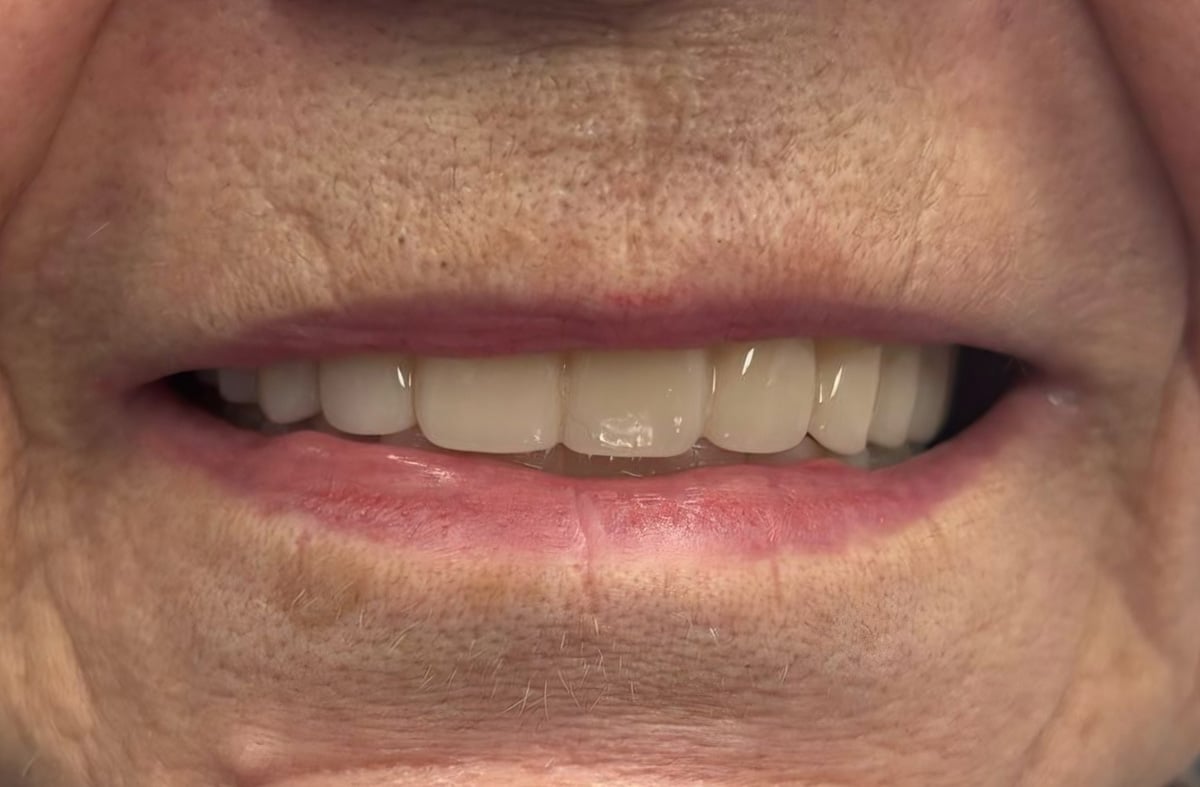
Fixed Full-Arch Restoration on Four Implants
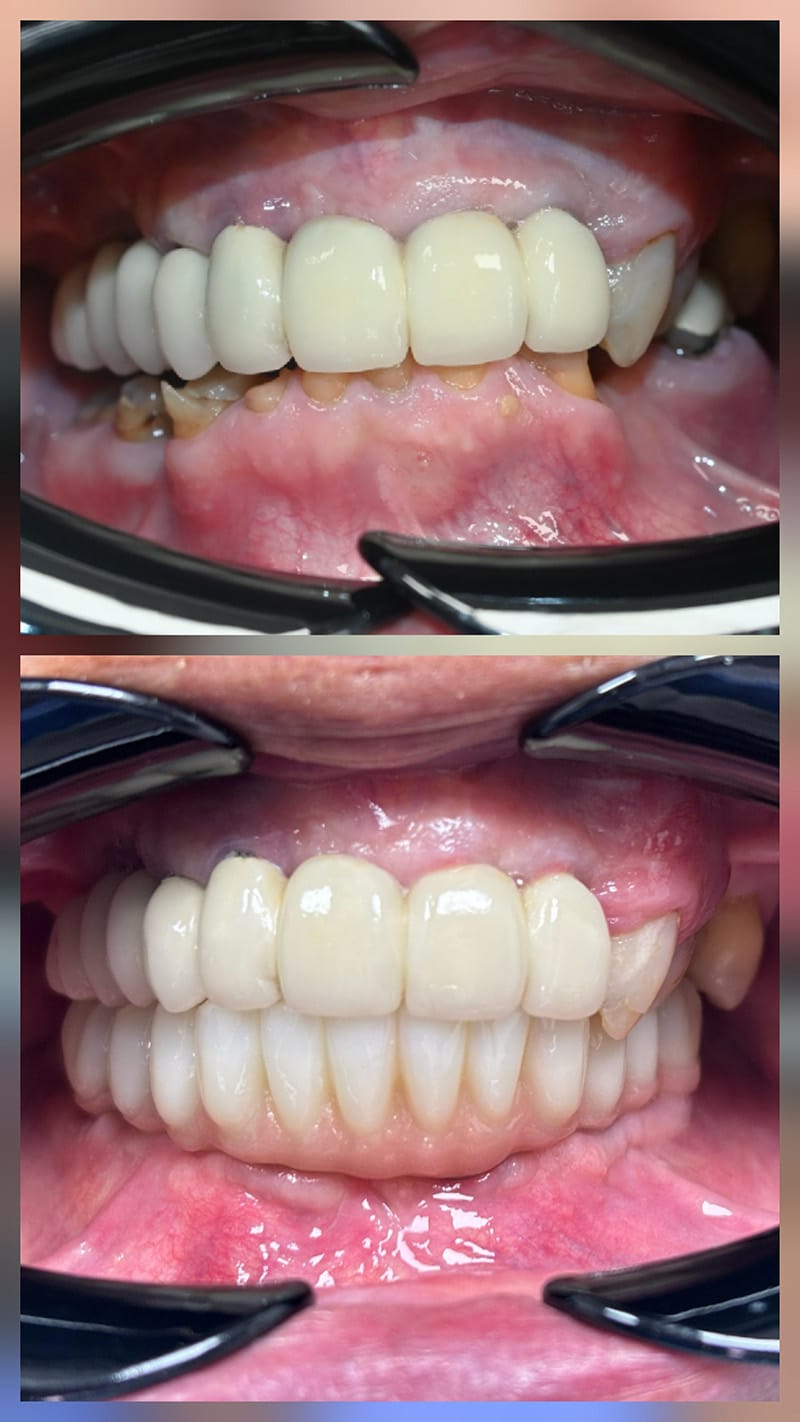
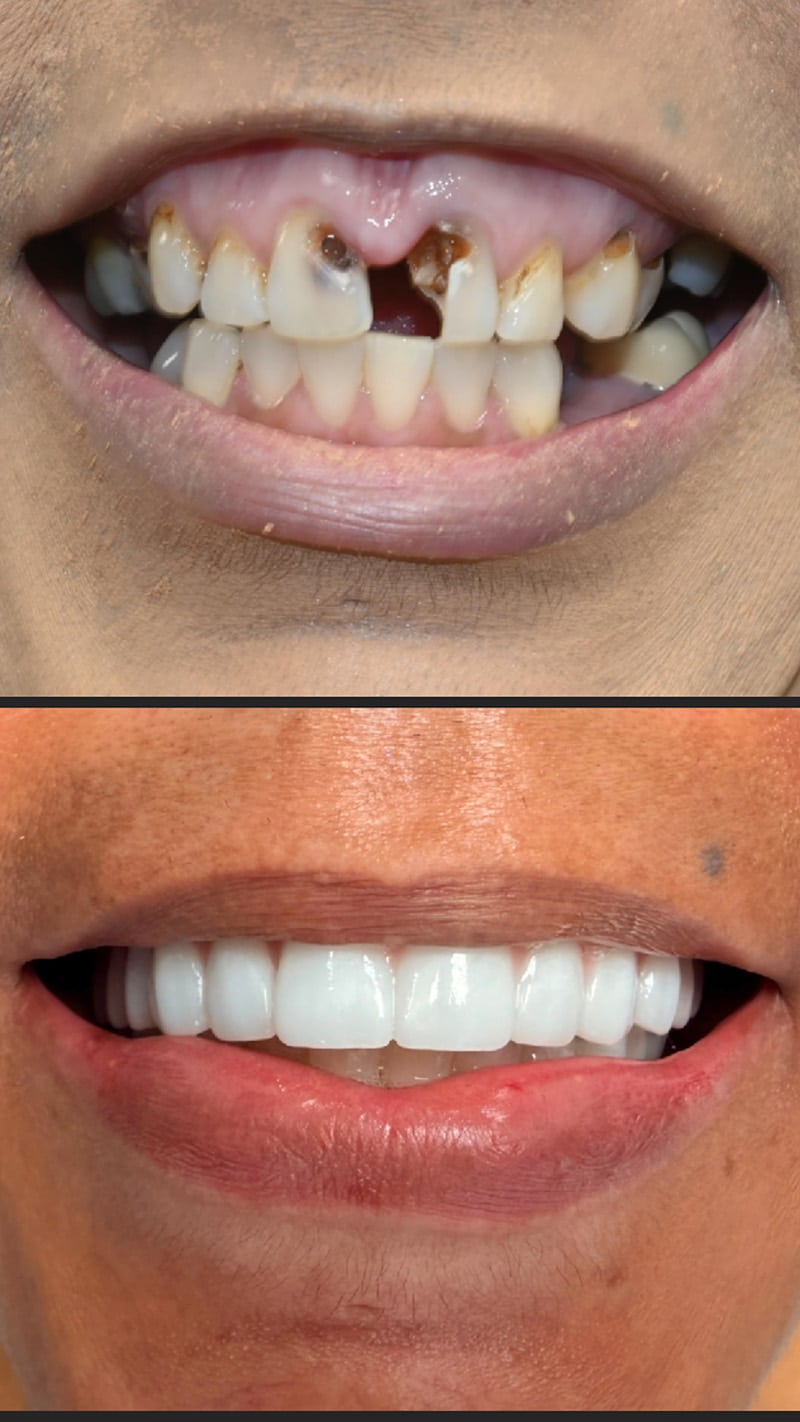
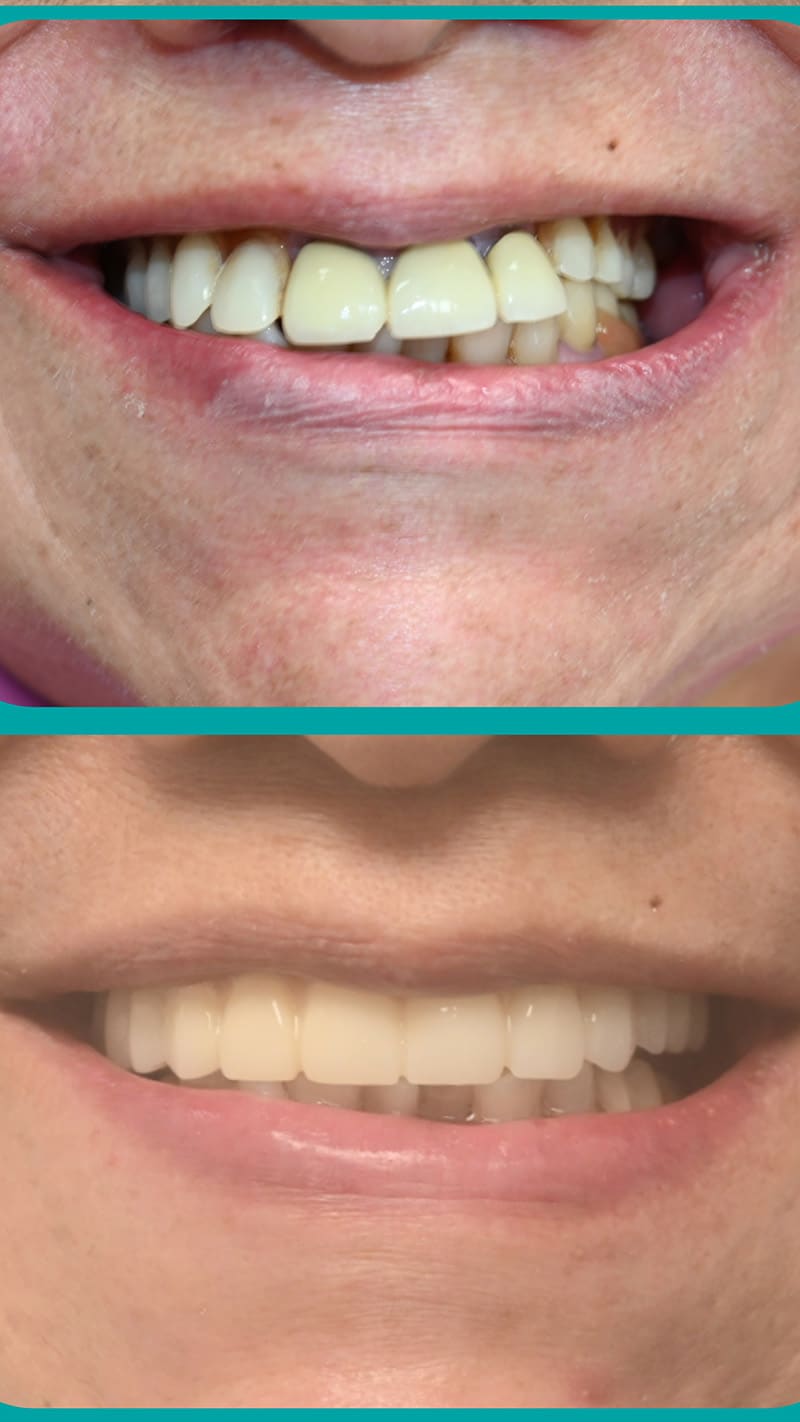
This treatment replaces every tooth in the upper or lower jaw with a single fixed prosthesis supported by four (or more) dental implants. The restoration is secured to the implants and is not removed by the patient. It is designed for people who have lost all of their teeth on the upper or lower arch, or whose remaining teeth are failing and are planned for extraction.
How Four Implants Can Support a Full Arch
The approach relies on implant position and angulation rather than implant quantity. Two implants are placed toward the front of the jaw, oriented more or less straight up and down. The two posterior implants are placed at an angle, tilted so that they engage the denser bone available toward the front and middle of the jaw.
Angling the back implants accomplishes several things at once. It allows longer implants to be used, which increases the surface area of contact with bone and improves initial stability. It moves the point of support further back in the arch, which shortens the unsupported cantilever at the rear of the prosthesis. And it allows the implants to be positioned around anatomical structures that limit vertical placement, namely the maxillary sinus in the upper jaw and the inferior alveolar nerve in the lower jaw. Because of this, many patients who would otherwise need a sinus lift or bone grafting can be treated without those additional procedures.
Teeth on the Same Day
When the implants achieve sufficient stability at the time of placement, a temporary fixed prosthesis can often be attached the same day. This is referred to as immediate loading or immediate function. The patient leaves with a full set of fixed teeth rather than going through a period with no teeth or with a temporary removable denture.
Same-day delivery is not always guaranteed. It depends on the quality of the bone and on how firmly the implants seat during surgery, which the surgeon assesses at placement. If adequate stability is not achieved, the implants are allowed to heal before the prosthesis is connected, which is a conservative decision made in the interest of long-term success.
The prosthesis delivered on the day of surgery is a provisional. Osseointegration, the process by which bone grows onto and bonds with the implant surface, takes roughly three to six months. During that window patients follow a soft diet to avoid overloading the healing implants. Once integration is confirmed, the provisional is replaced with the definitive prosthesis, which is fabricated from more durable materials and refined for fit, bite, and appearance.
Advantages Over a Conventional Denture
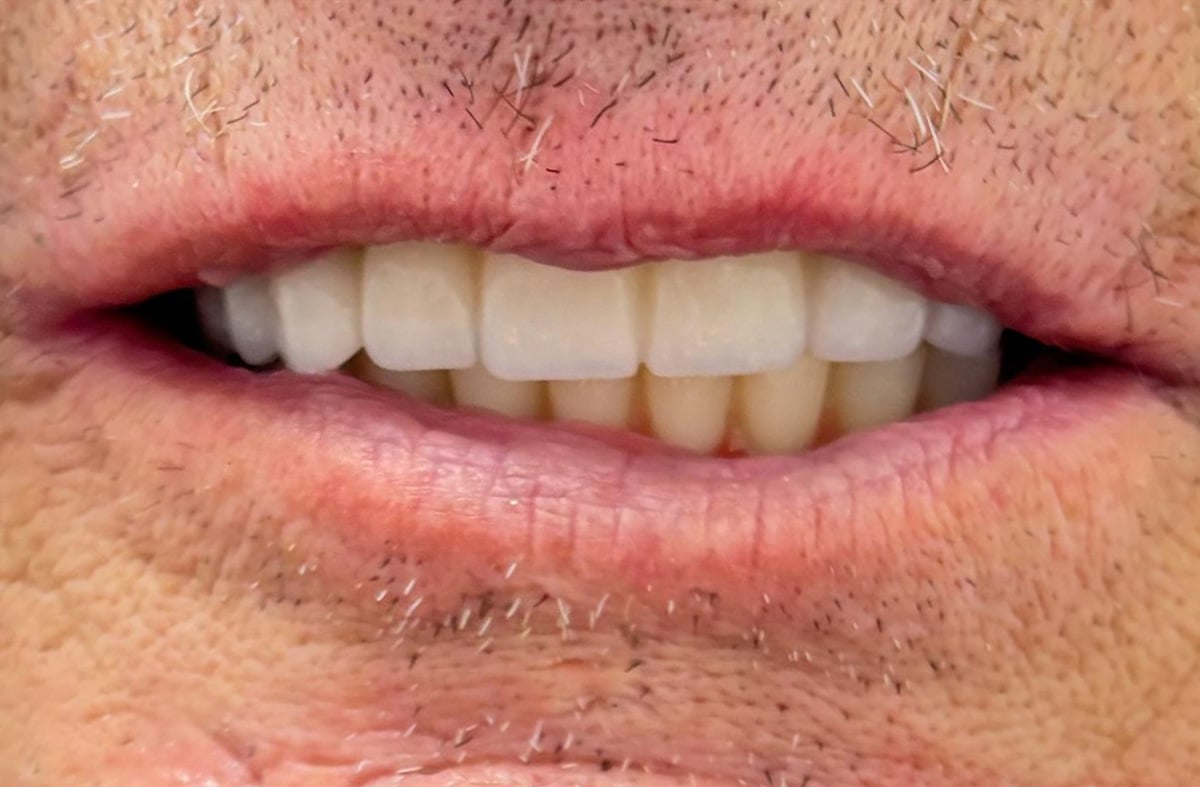
- Look and feel like your natural teeth. This is the closest to natural teeth available. The prosthesis is sleeker and stronger.
- It does not come out. The prosthesis is secured to the implants, so there is no slipping, no rocking, and no adhesive.
- Nothing covering the palate. An upper conventional denture typically covers the roof of the mouth for suction and support. A fixed implant-supported prosthesis does not, so taste, the sensation of hot and cold, and speech are more natural, and many patients find the gag reflex is no longer an issue.
- Restored chewing function. Chewing forces are carried by the implants and the bone rather than by gum tissue, which generally allows a far wider range of foods than a conventional denture.
- No sore spots from tissue pressure. The gum irritation caused by a denture pressing and rubbing against the ridge is largely eliminated.
Effect on the Jawbone and Facial Appearance
Once natural teeth are lost, the bone that surrounded their roots begins to resorb because it no longer receives functional stimulation. This shrinkage contributes over time to the collapsed appearance of the lower face that is common in long-term denture wearers. A conventional denture resting on the tissue does not prevent it.
Implants transmit chewing forces into the surrounding jawbone, which helps preserve bone volume in the area around each implant. It is more accurate to describe implants as helping to maintain the bone that remains than as regenerating bone that has already been lost. The prosthesis is also designed to restore the proper vertical height of the bite, which supports the lips and cheeks and helps re-establish natural facial proportions.
Materials
The temporary prosthesis is typically made of acrylic, often reinforced with a metal substructure for strength during healing. Definitive prostheses are made from materials chosen for durability and appearance, including monolithic zirconia, titanium frameworks with acrylic or composite teeth, and porcelain fused to a metal framework. The choice depends on the patient's bite forces, esthetic requirements, the amount of tissue that needs to be replaced, and cost.
Caring for a Fixed Full-Arch Prosthesis
Because the prosthesis does not come out, cleaning underneath it is the central maintenance task. Patients typically use a water flosser, specialty implant floss or a floss threader, and interdental brushes to clean the space between the prosthesis and the gum tissue every day. Regular professional maintenance visits are important, and the prosthesis is periodically unscrewed by the dentist for thorough cleaning and inspection of the implants and components.
Long-term success depends heavily on this hygiene routine. Plaque accumulation around implants can lead to inflammation of the surrounding tissue and, if it progresses, to bone loss around the implant. Other issues that can arise over time include loosening of a prosthetic screw and chipping or wear of the prosthetic teeth, both of which are generally repairable.
Who Is a Candidate
Planning begins with a clinical examination and three-dimensional cone beam CT imaging to evaluate bone volume, bone density, and the position of the sinuses and nerves. Patients with failing teeth can often have the remaining teeth extracted and the implants placed in the same appointment.
Tobacco use, uncontrolled diabetes, a history of radiation therapy to the jaws, heavy grinding or clenching, and certain medications that affect bone metabolism are all factors that are weighed during treatment planning. Not every patient is a candidate for four implants specifically; in some cases additional implants or a different design is recommended. A consultation and imaging are the only way to determine the appropriate approach.